ABA Therapy Strategies at Home: Using Mealtime, Bath Time, and Bedtime as Everyday Learning Moments
ABA therapy strategies at home do not have to make your house feel like a clinic. For many families, the most useful learning moments show up in routines you’re already moving through: meals, baths, and bedtime. With one small goal, a clear prompt, and consistent reinforcement, these parts of the day can support communication, independence, and smoother transitions in a way that feels practical.
If you’re parenting a child with autism, that kind of approach matters. Progress is usually easier to build when it fits real life. For Georgia families exploring support through Galaxy ABA, everyday routines can become calm, low-pressure places to practice important skills.
Quick Summary
- Mealtime: Build requesting, choice-making, and short waits.
- Bath time: Support transitions, tolerance, and simple routine steps.
- Bedtime: Practice one-step directions and growing independence.
- Best rule: Choose one routine, one skill, and one next step.
- If you want more support, you can learn about our in-home ABA services.
Why Everyday Routines Work for ABA Practice at Home
Daily routines already come with repetition. The same steps happen again and again, which gives your child more chances to practice a skill in a real setting instead of only in a separate practice block.
That also takes pressure off parents. The goal is not to run therapy on your own or turn every moment into a lesson. It is to look for one realistic opportunity inside a routine your family already knows. For many children, that makes practice feel more familiar and easier to repeat.
The REACH Routine Map
If you are not sure where to start, this simple framework can help.
R: Read the routine
Look for the part of the routine that feels hardest right now. Maybe your child struggles with waiting for a snack, getting into the bathroom, or transitioning away from play before bed. Start there instead of trying to change the whole routine at once.
E: Expect one skill
Pick one goal for that routine. That might be requesting, waiting briefly, following a one-step direction, tolerating a transition, or doing one part of the routine more independently. One small target is usually much more manageable than trying to work on everything at once.
A: Adjust the prompt level
Use the amount of help your child actually needs in that moment. That might be a short verbal cue, a visual, or a quick model. The idea is to set up success first, then gradually fade support as the routine gets easier.
C: Celebrate the smallest success
Small wins matter. If your child participates with less prompting, communicates more clearly, or moves through one step more smoothly, that counts. Reinforcement should match the effort and the moment, not require perfection.
H: Hand off to the next step
After a few days, ask yourself a simple question: Is this getting easier, staying the same, or getting harder? That answer can help you decide whether to keep going, simplify the goal, or get more support.
Mealtime Learning Moments
Skill opportunities to prioritize
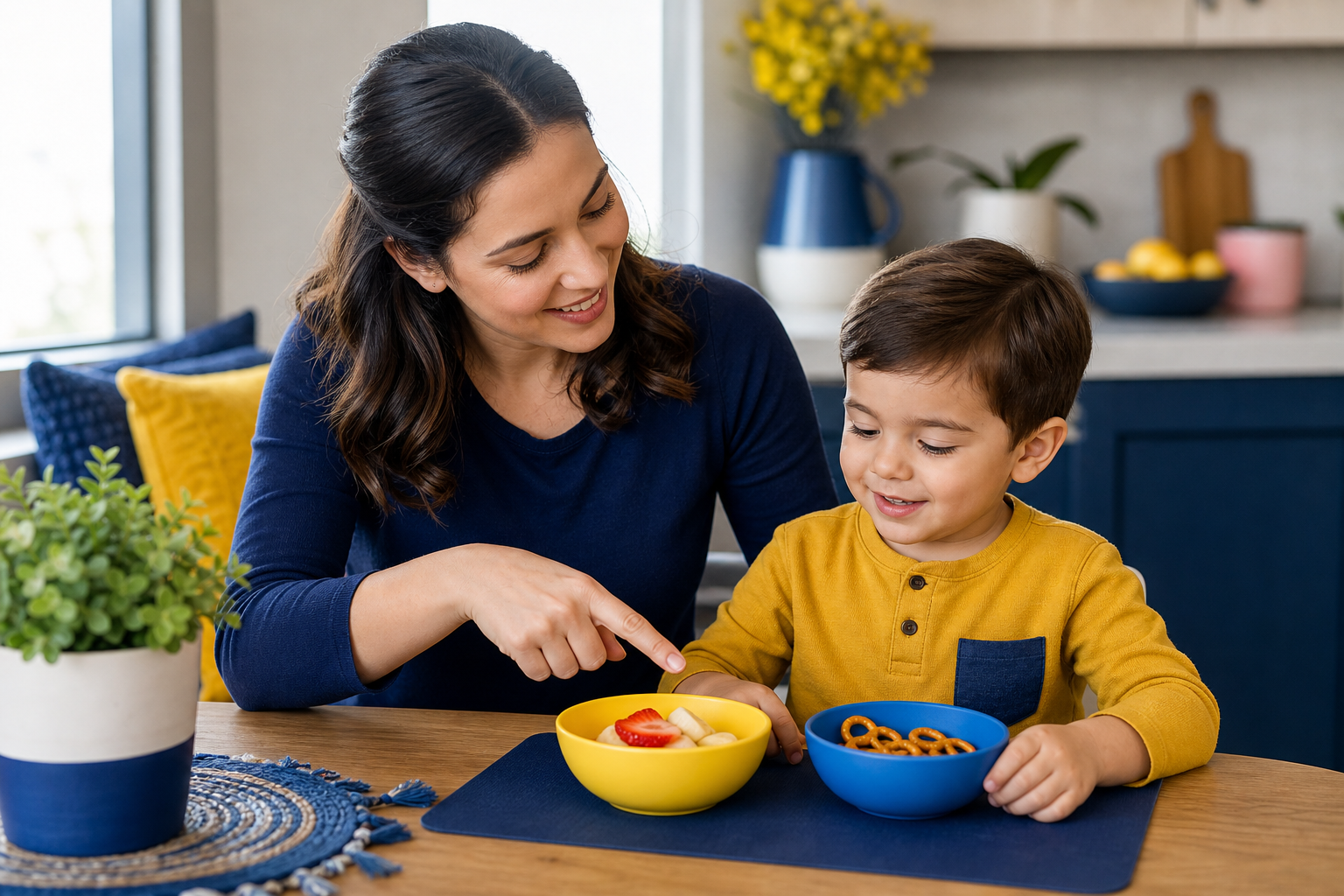
Mealtime can create natural opportunities for requesting, making choices, waiting briefly, and following one-step directions. For a younger child, that may look like asking for more, choosing between two foods, or handing over a spoon. For an older child, it may mean carrying a plate to the sink or finishing one cleanup step.
What this can look like in real life
Keep the moment simple. Offer two choices and pause. Wait a few seconds before handing over a preferred food so your child has a chance to point, sign, or use a word. If waiting is the goal, start very small.
Reinforcement usually works best when it stays immediate and natural. Often that means getting the food, hearing calm praise, or moving to the next part of the meal. If the whole meal already feels stressful because of appetite, regulation, or sensory needs, lower the demand instead of stretching the teaching moment too far.
A helpful boundary to keep in mind
This is not the same as feeding therapy. If eating, swallowing, or severe food restriction is the main concern, that calls for the right professional guidance.
Bath Time Learning Moments
Skill opportunities to prioritize
Bath time can support transitions, following a short sequence, tolerating nonpreferred steps, making choices, and simple imitation. Because it happens in a predictable order, it can be a strong routine for practicing both flexibility and follow-through.
What this can look like in real life
If bath time is consistently hard, start with the transition into the bathroom. First-then language can help make the next step feel clearer, such as first bath, then towel and books. A short visual sequence may help too.
Keep expectations realistic when your child is tired or sensory-sensitive. Some nights, success may simply mean walking into the bathroom with less resistance. Other nights, it may mean tolerating hair rinsing for a few seconds or following one direction like putting the washcloth in the tub.
A helpful boundary to keep in mind
If one part of bath time regularly leads to strong distress, simplify before adding more demands. The goal is to build steadier participation, not push through intense sensory discomfort. If bath time is one part of a bigger pattern at home, Galaxy ABA may be a helpful next step for families who want more individualized support.
Bedtime Learning Moments
Skill opportunities to prioritize
Bedtime can support transitions away from preferred activities, one-step directions, short waits, and doing one part of the routine more independently. That might look like getting pajamas, brushing teeth after one cue, or moving through a short book-then-lights-out routine.
What this can look like in real life
Bedtime usually goes more smoothly when the sequence is short, calm, and consistent. Using the same wording and the same order as often as possible makes the routine easier to learn.
At night, reinforcement should stay low-key. Calm praise, choosing between two pairs of pajamas, or moving to a bedtime story is often enough. If stalling keeps happening, it may help to ask whether the routine has become too long or whether expectations are moving faster than your child can comfortably manage.
A helpful boundary to keep in mind
The goal is steadier participation, not a perfect bedtime. If bedtime stress is affecting the whole household, families can explore in-home ABA services or reach out to Galaxy ABA for more support.
Everyday Routine Support Planner
Questions to use with any routine
Use these same questions for mealtime, bath time, or bedtime:
- What part of this routine feels hardest right now?
- What one skill are we practicing here?
- What would success look like at this stage?
- What prompt will we start with?
- What kind of reinforcement fits this moment?
- What sensory or transition trigger might make this harder?
- What should we avoid in this routine?
- How will we know our child is ready for less help?
- When would extra support from a BCBA or therapist make sense?
How to use it without overwhelm
Start with one routine, not the whole day. If mealtime is where things feel hardest, begin there. Once that routine feels steadier, you can use the same structure with bath time or bedtime.
When Home Practice Feels Hard and Where Georgia Families Can Get Extra Support
Troubleshooting without adding pressure
If a routine is not improving yet, the plan may still be too big. Common sticking points include too many demands, prompts that move too fast, reinforcement that does not match the child, routines that last too long, or starting when your child is already overwhelmed.
When that happens, simplify first. Shorten the routine. Use less language. Pick one target instead of three.
When professional ABA guidance may help
If the same routines keep stalling, stress is rising, you are not sure what skill to target, or prompts are hard to fade, individualized guidance may help. Parent consultation and in-home ABA can give families clearer structure while still keeping parents in an active, supported role.
A local path for Georgia families
For Georgia families, in-home support can be especially helpful because the coaching happens inside the routines that actually matter at home. Galaxy ABA offers in-home services, parent consultation, school collaboration, and support with the insurance process for many families across Georgia. Coverage and approvals depend on the plan, but the team works with many major insurers and Georgia Medicaid based on current client information. You can learn more at Galaxy ABA or schedule a consultation.
FAQ: ABA Therapy Strategies at Home
What are some ABA therapy strategies parents can use at home?
Parents can use positive reinforcement, clear prompts, first-then language, short waits, and one-skill-at-a-time routine planning. The most helpful strategy is usually the one that fits a real part of the day your child already moves through.
How can daily routines become ABA learning moments?
Daily routines repeat often, so they create natural chances to practice communication, transitions, and independence in a familiar setting. That repetition can make skills easier to carry over into everyday life.
How can mealtime help a child with autism build communication skills?
Mealtime creates built-in chances for requesting, making choices, waiting briefly, and following one-step directions. Those skills can grow without turning meals into long, stressful teaching sessions.
What ABA skills can parents practice during bath time and bedtime?
Bath time and bedtime can support transitions, following routine steps, tolerating nonpreferred tasks, and building more independence. The key is matching the goal to your child’s readiness.
When should families get professional ABA support instead of trying strategies on their own?
Professional support may make sense when routines stay highly stressful, progress feels stalled, parents are unsure what to target, or it is hard to fade prompts without frustration.
How can Georgia families get extra help using ABA strategies at home?
Families who want more support can look for in-home ABA and parent consultation that focus on the routines where stress shows up most often. If you want to explore that option, Galaxy ABA can help you understand what in-home support may look like for your child and family.