Autism Behavior Challenges at Home in North Carolina: Three Situations Parents Ask About Most
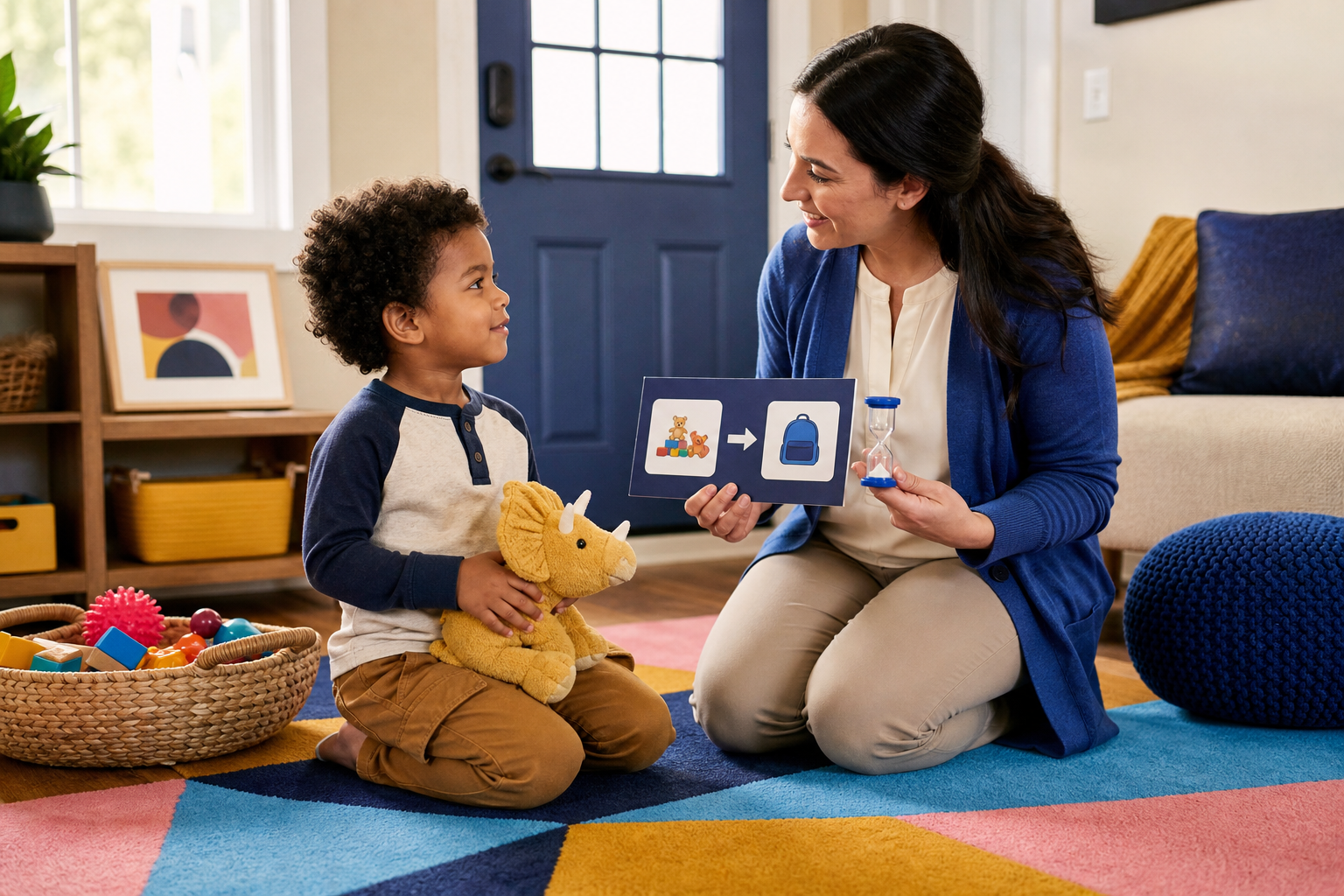
If you’re facing autism behavior challenges at home in North Carolina, start with two questions: Is everyone safe, and what happened just before the episode? The situations families often ask about are transitions and routine resistance, aggression or self-injury, and elopement or wandering. Each needs its own support plan, but all three become easier to understand when we look for patterns instead of blame.
A recurring episode can leave a family stressed, tired, and unsure what to try next. A behavior may communicate a need, reflect a sudden change, or show that a demand or environment is not working well for the child. The goal is not to force a child to look compliant. It is to support safer communication and participation, then review what happened with the child’s care team. Galaxy ABA’s in-home ABA services and parent support can connect families with assessment, parent consultation, and school collaboration when general guidance is not enough.
Quick Summary: Three Behavior Situations and the First Safety Question
Use this guide to sort out what to notice, what to practice, and what to share with a BCBA, pediatrician, school team, or emergency support.
Key facts
- Transitions and routine resistance: Look at changes, waiting, demands, fatigue, sensory load, and the end of a preferred activity.
- Aggression, self-injury, or property destruction: Protect people first. Once everyone is safe, review the pattern and consider safer ways for the child to communicate.
- Elopement or wandering: Treat unsafe leaving near traffic, water, heights, or unfamiliar places as a separate safety concern.
- Shared decision path: The S.T.A.R. Home Support Loop helps families Spot, Triage, Analyze, then Reinforce and review.
- Safety gate: Imminent danger, serious injury, unsafe elopement, or a possible medical concern calls for urgent professional or emergency help.
A BCBA, or Board Certified Behavior Analyst, may work with an RBT and the family to review an A-B-C pattern: the antecedent, or what happened before; the behavior itself; and the consequence, or what changed afterward. A functional behavior assessment (FBA) may be helpful when a pattern is persistent, severe, or unclear. The purpose is understanding, not blame.
The S.T.A.R. Home Support Loop
This simple framework can organize what you notice in all three situations. It keeps immediate safety separate from later teaching and review.
S — Spot the Situation
Write down where and when the episode happened, what came before it, what the child did, and what changed afterward. “Dropped to the floor when the tablet ended” gives the care team more to work with than “was difficult.” Consider communication, sensory, routine, and regulation needs without treating an observation as a diagnosis.
T — Triage Safety
Check for immediate risk, injury, illness, or pain. If the family already has a behavior or crisis plan, follow it. Safety comes first. A blog, a behavior log, or a general suggestion cannot replace individualized clinical or emergency support.
A — Analyze the Context
Use the A-B-C lens to look at setting events, observable behavior, and what happened next. Possible influences include escape from a demand, access to something preferred, attention, sensory regulation, communication difficulty, fatigue, discomfort, or an unexpected change. Your BCBA can help interpret the pattern.
R — Reinforce and Review
Look for prevention supports and a functional replacement, such as requesting help, a break, more time, attention, or “finished.” Reinforce safer communication and participation when the child is able to use them. Record what helped so the care team can adjust the plan. No single strategy works the same way in every situation, and one calm episode does not guarantee the next one will go smoothly.
Situation 1: Transitions, Meltdowns, and Routine Resistance
Leaving the house, ending screen time, bedtime, waiting, changing plans, and moving between settings can all bring up strong reactions. Note what is observable and also look at sleep, hunger, pain, noise, and communication demands. Calling a child defiant may hide the information that could make the next transition easier.
When the transition is happening: Keep language brief, create space, move unsafe items if needed, and follow the individualized plan. Avoid forcing an escalating transition without guidance from the child’s care team.
Before the next transition: A visual schedule, first/then language, a timer, a warning, a choice, or short practice may make the change more predictable. These are examples to discuss with the care team, not a universal script. The right support depends on the child and the situation.
Teach and reinforce: Practice asking for help, a break, more time, or “finished” before the next difficult moment. A toddler or early learner may use a picture, gesture, sign, or single word. A school-age child may check a schedule, ask for clarification, or plan for an after-school change. Reinforce safe steps and communication, not perfect compliance.
Record the pattern: Note the activity that ended, the warning or support offered, the child’s response, and how recovery went. Share recurring patterns with the BCBA, especially when they also appear at school or in the community.
Situation 2: Aggression, Self-Injury, and Property Destruction
Hitting, biting, kicking, head-hitting, throwing, or breaking objects are descriptions of what happened, not explanations of why. Record what came before and consider whether pain, illness, fatigue, communication difficulty, demands, denied access, or sensory overload may have played a role.
Protect people first: Create distance, protect the child and others, and remove unsafe objects when it is safe to do so. Follow the clinician-created safety or crisis plan. Do not improvise restraint. Seek urgent or emergency help for serious injury, escalating danger, or a situation the family cannot keep safe.
Review the pattern once everyone is safe: A BCBA may help the family consider changes to demands, choices, breaks, the environment, or communication access. Practice requests such as “help,” “break,” “more time,” or “move away” when the child is calm. A replacement skill needs to be accessible before a crisis, not introduced for the first time in the middle of one.
Bring health questions to the right person: Discuss persistent aggression or self-injury with the BCBA. Ask the pediatrician about possible medical contributors such as pain, illness, sleep concerns, or medication questions. Do not try to diagnose the cause from behavior alone. For school-age children, keep dignity, sibling safety, independence, and consistent language across settings in view.
Situation 3: Elopement, Wandering, and Community Safety
Moving away during a transition is different from unsafe leaving that creates risk near traffic, water, heights, or unfamiliar places. Describe where the child went, what they moved toward or away from, and how access or supervision affected the event. Elopement is a safety concern, not evidence of intentional misbehavior.
Make the safety gate clear: Follow the family’s emergency plan and maintain supervision as directed. Alert neighbors or first responders when the plan calls for it. If a child is missing, near danger, or cannot be located, seek emergency assistance. Autism Speaks’ wandering-prevention resource offers general ideas, not an individualized safety plan.
Prepare before the next incident: Review doors, windows, alarms, identification, locating supports, water access, likely destinations, and family supervision roles. Rehearse what each caregiver will do and what information responders may need. Update the plan after a near miss or a change in the child’s routines.
Teach and review: With the BCBA or another appropriate clinician, practice a safer way to request movement, a break, help, or access to a preferred place. Younger children may need simple communication and close supervision. School-age children may gradually work on community navigation and safe independence. Record near misses, triggers, safety responses, and environmental changes.
Three-Situation Home Response Map
Use this low-burden decision path during or after the next episode:
- Identify the lane: transition or routine resistance; aggression, self-injury, or property destruction; or elopement and wandering.
- Apply the safety gate: danger, serious injury, unsafe elopement, or a medical concern routes to the existing crisis plan, a clinician, urgent help, or emergency support.
- Capture the A-B-C snapshot: setting, observable behavior, immediate response, possible need, and what changed afterward.
- Choose the prevention focus: visual transition support; demand, choice, or break support; or an environmental and access-to-danger review.
- Choose a replacement: help, break, more time, finished, attention, or a safe way to move away.
- Record the minimum useful data: time, setting, trigger, safety impact, replacement attempt, and what helped.
- Coordinate: Share the snapshot with the BCBA, pediatrician, school team, or another clinician when the pattern crosses settings or needs review.
The map is meant to answer three practical questions: What do we do now, what do we practice next, and who needs to know? A few accurate observations are more useful than a detailed log a family cannot maintain.
North Carolina Context, Care-Team Coordination, and When to Get More Help
Local Support in North Carolina
North Carolina is the confirmed target for this article. Galaxy ABA lists communities including Charlotte, Raleigh, Cary, Durham, Apex, Chapel Hill, and Fayetteville among the areas it serves. Availability, insurance details, and local resources can change, so confirm current information before making a care decision. The Autism Society of North Carolina is one starting point for statewide family support.
Galaxy ABA’s model includes personalized in-home ABA, BCBA-led assessment, parent consultation, school collaboration, and insurance-management support. These services complement school and an IEP. Families can ask how home observations will be shared with the clinical team and, with consent, coordinated across settings.
Track and Share the Pattern
Bring the one-minute A-B-C snapshot to parent consultation, a BCBA review, or a pediatrician conversation when medical factors may be involved. If the pattern appears at school, share the relevant observations with the school team. Coordination can support compatible expectations and functional communication without requiring every setting to use identical tactics.
When to Get More Help
Seek immediate help for danger, serious injury, unsafe elopement, a possible medical concern, or any situation in which people cannot be kept safe. For recurring concerns, contact the BCBA about prevention, replacement skills, data, or an FBA. Contact the pediatrician for pain, illness, sleep, medication, or other health questions. This guide does not replace medical advice, a behavior plan, or a crisis plan.
FAQ
What is the A-B-C model in ABA?
A-B-C means antecedent, behavior, and consequence: what happened before, what the child did, and what changed afterward. Looking at that sequence can reveal patterns without blaming or diagnosing a child. A BCBA can help interpret the pattern and decide whether a more detailed assessment is appropriate.
What should I do when my autistic child has a meltdown during a transition?
Start with safety, reduce escalation, use less language, allow space, and follow the existing plan. Later, review warnings, visual supports, choices, sleep, hunger, sensory demands, and functional requests with the BCBA. A toddler may need a picture or gesture, while a school-age child may benefit from a schedule or more time to prepare.
How should parents respond to aggression, self-injury, or property destruction?
Protect people, create distance, remove hazards when safe, and follow the plan. Do not improvise restraint or assume the cause. Once everyone is safe, record the setting, trigger, response, and what helped. Contact the BCBA for recurring patterns, the pediatrician for possible health factors, and emergency services for danger or serious injury.
What is autism elopement or wandering, and how can families improve safety?
Elopement or wandering is moving away from supervision in a way that creates danger or makes the child difficult to locate. Families can review access points, alarms, identification, water safety, likely destinations, supervision roles, and first-responder planning. Work with the clinical team on safer ways to request movement or help. An individualized emergency plan is essential.
When should I contact my child’s BCBA, pediatrician, school team, or emergency services?
Contact the BCBA for recurring patterns, prevention changes, replacement-skill teaching, or an FBA. Contact the pediatrician for possible health factors. Involve the school team when the pattern crosses settings. Use urgent or emergency help for danger, serious injury, unsafe elopement, or an inability to keep people safe.
A recurring behavior situation can feel isolating. Start with safety, write down one clear pattern, and bring it to your child’s care team. With individualized support and steady review, the next step can become more within reach.